
“They delivered on the website as promised.”
Build what people actually want, before a line of code is written.
Discovery replaces assumptions with evidence, so development budget goes toward something people actually want.
What skipping discovery actually costs.
Most product failures come from decisions made without enough evidence.
0
%
Fully successful projects
Only 31% of all software projects are considered fully successful, according to the Standish Group CHAOS Report.
0
%
No market need
The most common reason startups fail is building something the market never needed, according to CB Insights research.
0
x
Costlier to fix late
Fixing a problem after launch can cost up to 100 times more than catching it at the design stage, per IBM’s Systems Sciences Institute.
0
%
Higher development costs
Projects that skip discovery consistently run roughly 40% over budget compared to those that don’t, across multiple industry studies.
What Strategy & Discovery actually is.
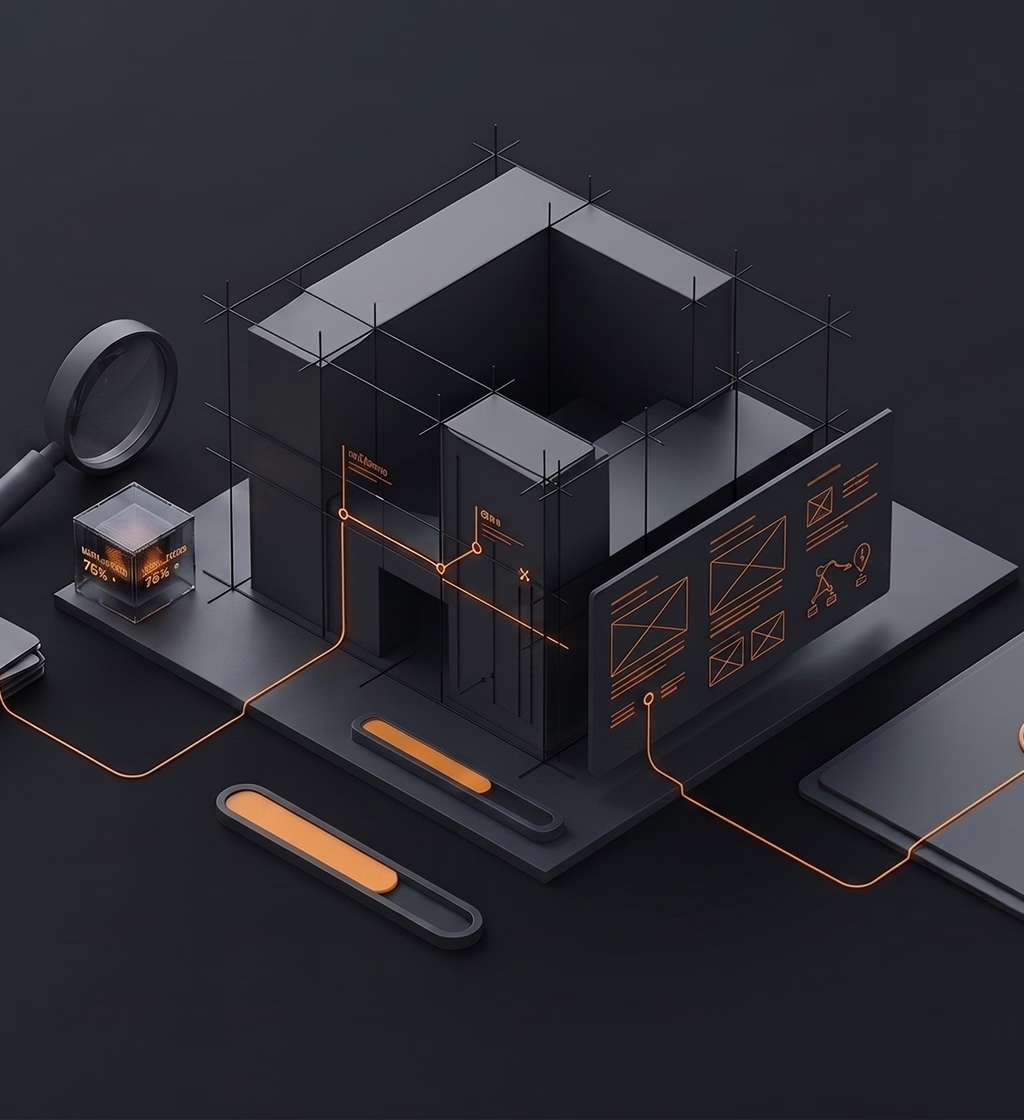
Strategy and discovery is the work that happens before a single screen is designed or a line of code is written. It’s a focused engagement, typically two to four weeks, that investigates the market, the users, and the technical constraints behind a product or platform, and turns that research into a clear, validated direction.
It exists because building digital products is expensive, and most assumptions behind a first idea are fragile. Discovery replaces gut feel with evidence. By the end of the engagement, the direction is clear, whether that means moving forward with confidence, adjusting the concept, or, in some cases, stopping before real money gets spent.
Businesses typically commission this work when:
- There’s a product idea but no validated need behind it
- An existing platform is underperforming and the cause isn’t clear
- Leadership needs a solid business case before committing budget
- Internal teams disagree on scope or priority
- A previous build fell short and a more rigorous approach is needed this time
Capabilities.
Each one addresses a specific risk. They turn a rough idea into a plan worth building.
Brand strategy
Positioning, messaging, and direction that anchor every design and build decision that follows.
Feature prioritization
Must-haves separated from nice-to-haves, using evidence from research and business goals rather than internal opinion.
Digital roadmapping
A phased plan connecting where the business is today to where it’s going, with priorities and sequencing accounted for.
Market research
A clear view of the competitive landscape and where real opportunity sits, so the business case rests on fact, not instinct.
Project discovery
Requirements, scope, and priorities defined clearly before a single screen is designed or a line of code is written.
Stakeholder alignment workshops
Structured sessions that surface disagreements and expectations early, before they turn into expensive mid-project debates.
No market need
The most common reason startups fail is building something the market never needed, according to CB Insights research.
Technical feasibility check
Early assessment of integrations, platforms, and constraints, so the plan is buildable, not just desirable.
Trusted by forward-thinking businesses across Africa and beyond.

Mr. Chijioke
CEO | LumenCharge

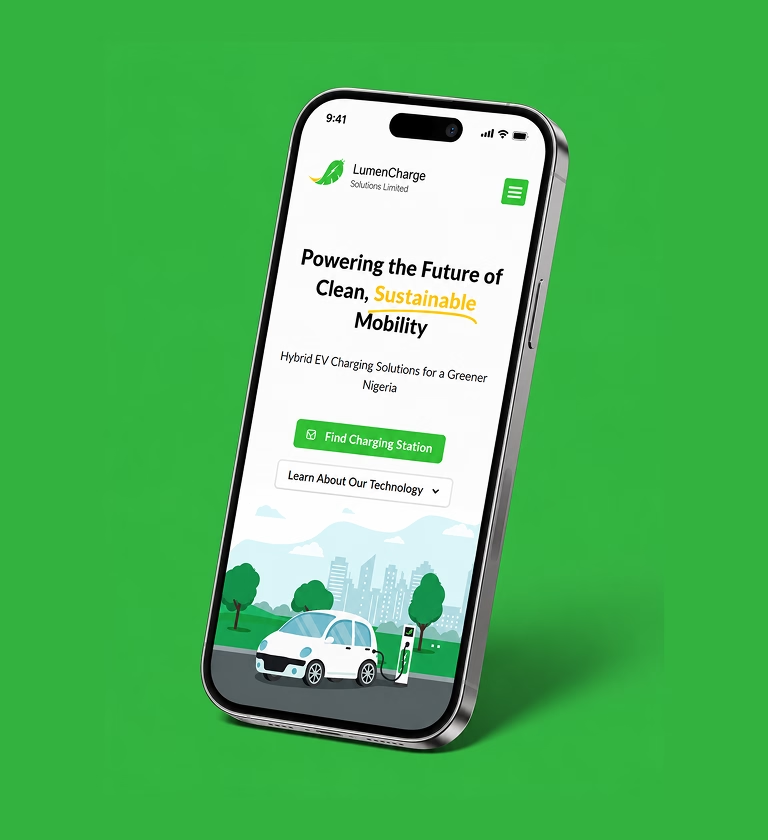
40% Month-on-Month Growth. One Platform. Six EV Charging Products.
Six charging product lines. Three buyer types. One company building the infrastructure for electric mobility in Nigeria.
“The entire process of creating and building our website was made easy by the patient, yet dedicated, excellent and committed team at BeeTcore. The gentle yet consistent reminders inspired my team and I to focus on the goal and within timelines. The extra effort the BeeTcore team took to train us on a few tech challenges we had was also beyond my expectations.
I am super excited we found BeeTcore team for our website project. I am also thankful for the detailed work and continued after site lunch support package we get
It has been so inspiring for us to work with a team not only concerned about iys goals as a company but also your success as a brand.
Looking for a brand that cares, then you found it in BeeTcore. And no this is not a paid review, they actually absolutely impressed me.”

Teacher Dora
Founder
Trusted by startups, growing businesses, and enterprise clients alike.
“A business you can definitely deal with. Integrity! | Consistency in delivery. Attention to detail and the fact that you advise even in the process of development.”

Wale Akinjobi
Principal Partner
YOUtv
“This brand is one brand I’m very proud to associate with. Personally, I haven’t seen any brand like theirs. Their professionalism and customer service is unparalleled, The way they pay attention to every detail catches my heart each time. I would recommend them to everyone on a 1000% Keep on the good job guys. #HappyClient #zoeparisfoundation #zoma”

Light Jachike
Director
Zoma
“Amazing, amazing work done by BeeTCore on the website for my organization’s online bootcamp, The African MasterClass Series! Super easy to navigate, modern and very fast too! Love, love how patient your team was in making edits. You have all of my five starts and more!”

Katherine Busari
Project Director
African Masterclass Series
Questions, answered.
What does a strategy and discovery engagement typically cost?
Pricing depends on scope, team size, and the complexity of the concept. Every engagement is scoped individually after an initial conversation, so the result is a clear proposal, not a vague range.
How long does discovery take?
Most engagements run two to four weeks. A tightly scoped discovery for an early idea can wrap in two weeks. A more complex one, spanning multiple stakeholders or an unclear technical picture, typically takes closer to four.
What do we actually walk away with?
A set of concrete, decision-ready deliverables: a validated problem statement, research findings, a prioritized feature list, a technical feasibility view, and a phased plan with realistic estimates, ready to take to a leadership meeting or investor conversation.
Who is this for?
Founders validating a first idea before committing budget. Growing businesses planning a major new feature or platform change. Leadership teams that need a business case and a clear plan before approving spend. If the direction is already validated and the team is aligned, discovery may not be the right next step, and that gets said plainly on the first call.
How is this different from just starting the project?
Starting without discovery means the first sprint is built on assumptions. Discovery replaces those assumptions with evidence, which typically means less rework, fewer scope changes mid-project, and a first version closer to what people actually need.
Do we need a technical team in place first?
No. Discovery is designed to inform those decisions, not depend on them. Many businesses come in before they have hired developers or chosen a platform. The feasibility work done during discovery often shapes exactly those choices.
Ready to build on solid ground?
A discovery call takes about 30 minutes. We’ll talk through the idea, the constraints, and what needs deciding. If discovery is the right next step, we’ll scope it. If it isn’t, we’ll say so.